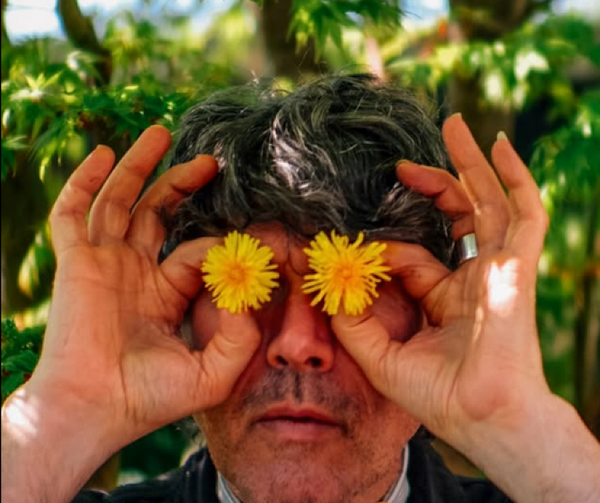
Grace Cummings

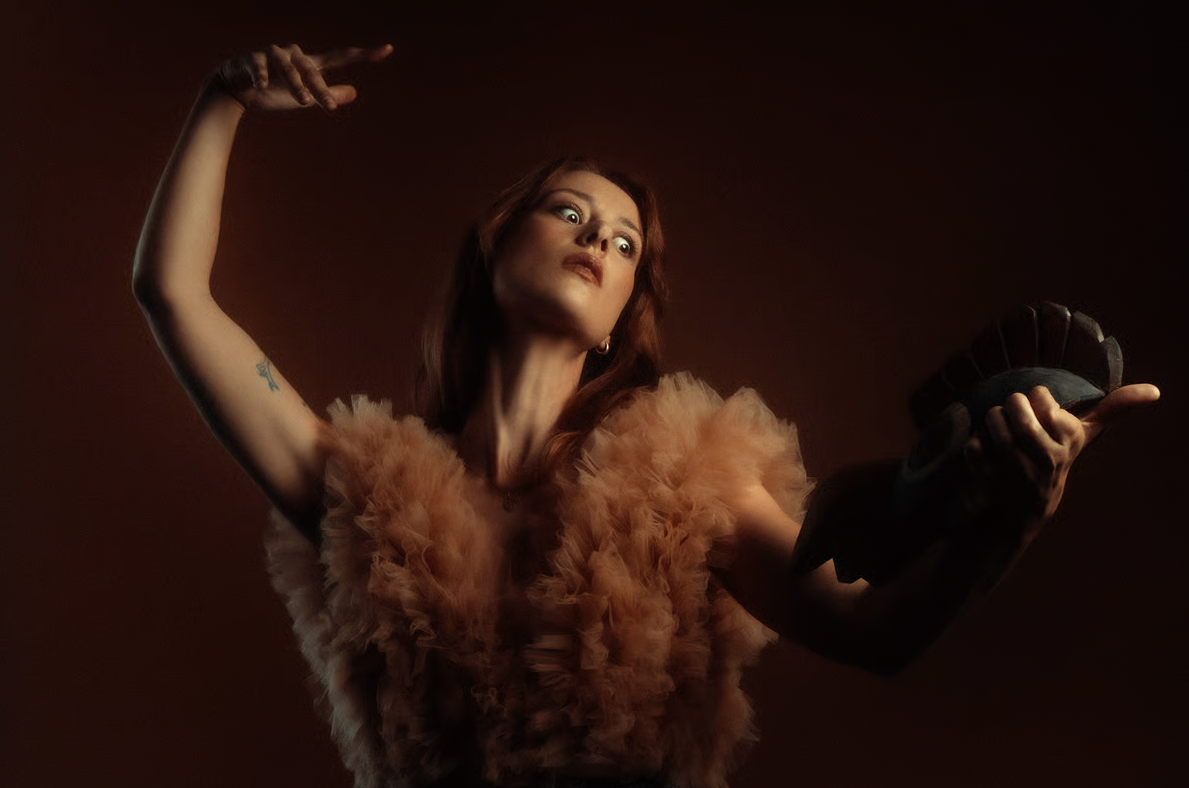
‘I like to start everything with a little bit of an electric shock, and I do it to myself and playing live as well. Like if I'm not feeling very good, I'll do something that's scary to me to stop. So that's where you start, I don't think you need to go in gently’.
It is morning and summer in Glasgow and evening and winter in Melbourne when Clash joins Grace Cummings to talk about her fourth album, ‘Bloodhorse!’.
After a brief complaint about the weather (it is equally cold on both sides of the world), the next forty-minutes or so are spent unpacking this extraordinary record.
It is the second album she has made with Jonathan Wilson, at his studio in Topanga Canyon, where he has also worked his magic on albums by Angel Olson, Father John Misty and Margo Price as well as his own records.
Yet, although only a couple of years have passed since the release of ‘Ramona’, the record that saw her reputation extend from her home country and around the world, it feels like a lot has changed in the music, the process and her place in the wider music community.
And while, as ever, her soaring voice is the focal point of the ‘Bloodhorse!’, the musical palette has widened considerably, with a generous sprinkling of strings adding drama and depth throughout.
Discussing the record, Cummings is serious and thoughtful, reflecting her approach to, and love of, making records. She makes it sounds difficult and hard-work but simultaneously fun, and the results are life-affirming and, sometimes joyous.
She explains the process of making the record touching on her love of classical music and her restless muse, always seeking to surprise and challenge both herself and her audience, as well as the perennial problem of making a sustainable career from her art, especially when based in Australia.
Could you go back to the process and explain how you began sketching the album out, or how that works for you?
Grace Cummings: Well, I think that writing any album sort of starts from the moment you stopped recording the last one. For instance, I've had songs on previous albums where I wrote it on the day of the last recording, but we didn't have time to record it, so it was on the next one. This time I went in with over fifty songs that I could choose from, but I didn’t really have any kind of preconceived concept or story or whatever. But the one thing that I did want was to be as much of myself as possible. It was important to me to be extremely honest and true and not to worry about how that came out.
What order did the songs come in and how do you capture them before recording them properly?
GC: I had written ‘FAKE’ and ‘Bloodhorse!’ previously. Those ones I had had for a while, maybe a year or something like that. Others like ‘Paradise’, ‘My Island and Me’, and most of ‘The Hills Are Alive with the Sound of Morphine’, the lyrics to ‘John Lennon’ and ‘I’m Not Crazy’ that were actually done or redone in the studio. ‘Paradise’ and ‘My Island and Me’ were pretty spontaneous.
Did you use voice notes, or did you do full demos when writing?
GC: I do voice notes. The only one that had a demo was “My God’, because it was important to me to have the drum machine and the specific kind of beat and stuff like that, but the rest of my stuff is mostly voice notes. And if there's like a string part or another part, I will just sing it in the voice note as well, because once I've got it, it's quite urgent almost for me. I just want to save it and go into the studio and record it. I'm lucky that Jonathan doesn't really give a shit about demos. Also, there's a lot of things that I don't want to plan. I like to give direction that focuses on feeling and emotion and what I would like the players to be feeling or to have in mind whilst they're playing rather than being really specific and getting all finicky about it.
Did you feel different expectations of yourself either internally or externally when going on to album number four or did it just feel like a natural continuation of the process that you'd built up through the previous ones?
GC: A little bit of both, but I did have the expectation of myself to just not to care about outside judgment or opinion. I think that I've gone through a particular kind of change in my life where I've realised, not that previous albums have been untrue, but that some of my opinions and what I think I like or dislike, have kind of been adopted by others, and I've realised that that's not actually who I am. This time around, I just thought, ‘fuck that’. And I'll get back to being who I am, really.
You worked with Jonathan Wilson again, can you say a bit about the recording itself and how that worked?
GC: I'm really love Jonathan and we formed a great friendship and relationship from working on ‘Ramona’. We very much understand each other - not just as people, but musically as well. It is down to the kind of like chaotic way that we both are where everything is very much understood and unsaid. So, things come together very quickly, and we do a lot. And nothing's off limits. He doesn't really sit there and tell anybody what to do. It's kind of just like, well, what next? Okay, let's go. It's just extremely playful, and we're both. . . I think we're both have that kind of Jack Russell energy.
I love recording, if I could I wish I could do it every day of my life.
The bulk of the recording was done in a week, and then I stayed for a bit longer for the string section to come in, and that was kind of it. We did 16 songs or something like that, so it was difficult to take it apart more so than to make it and to leave some songs behind.
In some ways, the album sounds like it could have been made at any time in the last forty or fifty years. It seems to have been crafted as an album and not a collection of individual tracks. Is that deliberate?
GC: I certainly think of things as a whole, and I know that's sometimes not the way that you should think about it. But I can't help it, and it's not going to change because I love that, and I think that it's really important. I kind of think about it as being like in acts almost.
And the reason it sounds like that is because Jonathan's an analogue guy. That's how everything's recorded and listened to, you know, like everything, even the synth stuff, we're manually getting that in the right tempo while it's going into the tape. But though he's analogue, but he's also hi-fi. I love that too because everything is something real, even though it doesn't sound like it, except for one thing on the album, and yeah, I want to listen to something like it's an album. I don't really want to listen to things like they're supposed to be on a computer.
Having said that, ‘The Hills Are Alive with the Sound of Morphine’ is a really striking opening track. Maybe you could say a bit about that choice of opener and the use of strings across the record?
GC: I like to start everything with a little bit of an electric shock, and I do it to myself and playing live as well. Like if I'm not feeling very good, I'll do something that's scary to me to stop. So that's where you start, I don't think you need to go in gently. I think people need to be given a release sometimes, and that's why the sequencing is important to me. Hopefully, you've put the moment of release in the right spot, but it's not at the start for me.
The strings . . . I am an incredible lover of classical music, and a big lover of not a particular period of classical music, but romanticism in in general. I think that stringed instruments like cellos and violas and violins have some of the most emotional depth I can think of. They are my favourite things to listen to, aside from the bagpipes. You know the way that a stringed instrument can have a kind of glissando, and you know, it really kind of wails and has an emotion, a cry.
Of the quartet, there were two were people I had worked with before, who were incredible, and two who I hadn't, who were amazing. And these guys don't fuck around. I'm extremely lucky to have some of the best players in the world on this on this record, I can't believe it.
Does it become a challenge playing live without the strings and would you like to do some shows with a bigger band?
GC: If I win the lottery, I'll get back to you. But it doesn't mean I'm not going to make a record without it for that reason. A record is always different to a live show, and I never want it to be the same thing. I don't think that's the point. And I'm so lucky that I have a band that are brilliant, and one of my other favourite things to do to create is different ways of playing songs. You know, like depending on where you are. I don't think that it should be confined to one particular way.
How ambitious are you - for the album and beyond?
GC: Oh, it’s moving all the time, and it's trying all the time, and it's caring all the time. I want to care. I want to keep moving. I don't want to become stuck. I want to remain excited and uncomfortable in a way that that means something. But I also would love to be able to do this in my life as something that sustains me.
You are four acclaimed, and increasingly popular, albums in, how close do you feel to that?
GC: Very far. My ambition is to be truthful and that includes this. I don't want to say something that isn't true. I'm very far from it. It's hard.
Also, being an Australian, being so far away from everything, it's extremely hard. You kind of haemorrhage money all over the world. It takes a lot.
Sinead O'Connor said that the reason you make an album is you'll go fucking mad if you don't. That's true. But I'm very far from being able to sustain myself. It's incredibly stressful. You know, not to be like woe is me, but I'm also extremely, extremely grateful and extremely lucky to be where I am. But it's a testament to the care and the need that I have to do it. Because I think a lot of people would fucking give up. It's not for the faint of heart.
So now that the album is out, what’s the plan for the next, and where do you hope to be at the end of it?
GC: Well, for the rest of the year, I am doing tours in Australia and the UK and Europe with my band, and in the US just alone or with one other person. I'm really looking forward to that. In an ideal world, in an ideal world, I just hope that this finds the right people that connect with it, and that I will keep being pushing myself to just have a little bit more courage every time, you know.
‘Bloodhorse!’ Is out now on ATO Records. She tours the UK and Europe in November.
Originally appeared on Clash, 19 September 2026
![Arthur Lee & Love [2002]](https://storage.ghost.io/c/90/a5/90a524f5-fc4e-43e3-b54f-943119da04e6/content/images/size/w600/2026/01/Tour2002.jpg)