Snail Mail

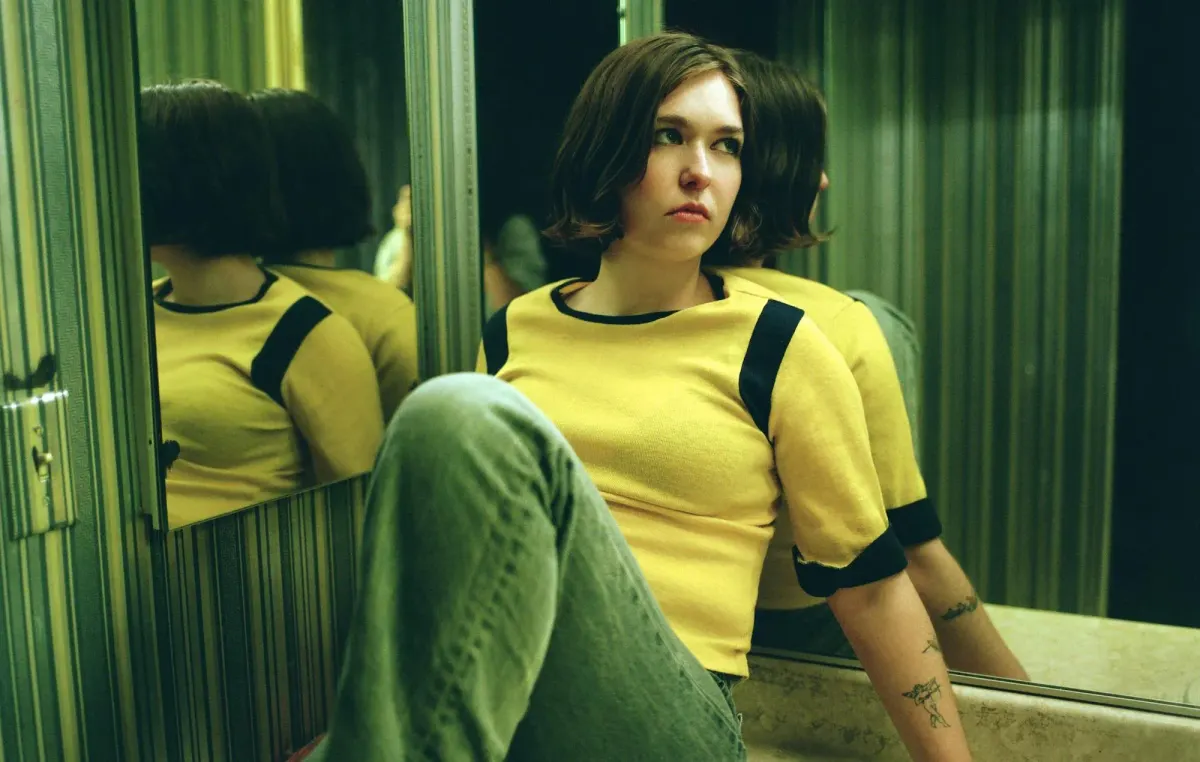
Earlier this year I spoke to Lindsey Jordan around the time of the release of her third album, 'Riccochet'. It remains one of my favourite albums of the year.

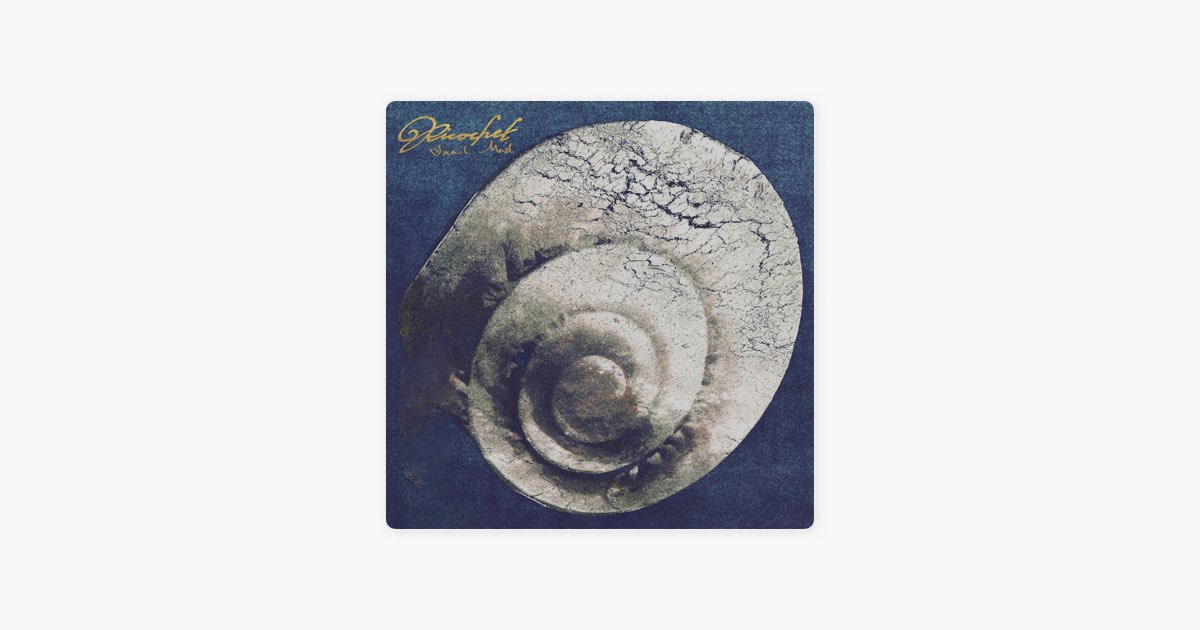
Lindsey Jordan is at home in North Carolina, talking animatedly to Clash about her third Snail Mail album, ‘Ricochet’, with occasional barked interludes from her dog, Pip, the some time star of her instagram feed and the ‘Dead End’ video.
Snail Mail 'Dead End'
Although it is five years since the release of its predecessor, ‘Valentine’, there is much to discuss: operations, leaving New York, extensive touring and the slow gestation of the album. A record that would have sounded equally at home on college radio thirty years ago, it is a timeless mix of insecurity, darkness, hope and occasional humour, the work of an artist more confident in her own skin.
The story of ‘Ricochet’ is, given the timespan, a somewhat meandering one, beginning with the vocal cord surgery she underwent at the end of 2021, though voice issues had been plaguing her performances since her debut, now over a decade ago.
“So I hadn't really taken vocal lessons when I was younger,” she says, “but there was a point in middle Snail Mail times, like where I was trying to get vocal lessons to try to figure out what the fuck was wrong with my voice. I was continually losing it since we played South by Southwest for the first time when I was, like, 16. It was other people in bands saying ‘this sounds like polyps to me’ when I started to think okay, crazy, I need to go to the ENT. I went to the ENT and right after COVID was letting up, and people were allowed to tour again, that was when I got the diagnosis.”
“It was a really intense operation and healing process. I had to learn how to sing and speak again. I had a whole month where I couldn't talk at all, which was really disturbing. I mean, I lived alone in New York in my apartment at the time, and so I there was a few things that happened where I was like, holy shit, what do I do now? And I had a voice to text thing that I used to try and communicate.”
The outcome, however, justified the investment and the lay-off from working.
“Yeah, everything's easier now,” she explains. “It's like hitting the target is easier. Knowing how much power is going to come out is easier. And having a whole new range is awesome. I used that a lot on the record and and, yeah, I don't have to work at it. I think a lot of the stuff that used to give me a really hard time about touring and live sessions and stuff now is gone, which is such a gift. I can enjoy myself more!”
The immediate aftermath of the operation was a return to touring, but it was also a period during which she began working (“in hotel rooms, outside the bus in parking lots, pretty much every day”) on new songs, though this time around the musical inspiration came some time before the lyrical one. In fact, though most of the songs on Ricochet existed in some form in this period, it took a further three years before the sketches and demos become masters, via the completion of the words and, ultimately, the recording process. The former part came via a self-imposed pressure to speed up the process and a cinematic masterpiece.
“Through coming to the conclusion that I, like, maybe wasn't ready to jump in lyrically, I decided to just try to flesh out all of the instrumentals at once. And then I ended up, over the span of, I don’t know, 2 or 3 years touring, finishing up these 11 songs all at the same time. I was like, this one needs a bridge, this one needs an outro, and then I was writing the vocal melodies, like, to an excruciatingly detailed point. Basically, I knew how many syllables I needed for lyrics.”
“And then by the time I finished touring ‘Valentine’ I had moved into this house. I knew I wanted to try really hard to get myself to a place of being ready to make the lyrics. It was its own project in some ways, and I was anticipating wanting to do something different for such a long time.”
My Maker
One line - “above us, it is just sky” (from ‘My Maker’) - had emerged as a kind of North Star during the writing of the music, and its attempted reconciliation with religion and the afterlife was to become something of a theme. Enter Charlie Kaufman . . .
“About three years ago. I checked Letterboxd,” she recalls, “and I saw that this movie ‘Synecdoche, New York,’ by Charlie Kaufman. Yeah, it's heavy. It just reignited I that have insanely intense religious OCD that started for me as a little kid around confession and and then also around heaven and hell. And I basically was able to dodge all of that as an adult for the most part, until I saw this movie, and it got me into this pretty insane loop for years of being terrified of the doctor and dying and losing my parents and losing my friends and losing my job eventually. It’s like all I ever thought about, and it was ruining my early twenties.”
Synecdoche, New York trailer
“But I knew I wanted to apply that to the lyrics and that I would love to make something of it. But it felt like it had to be a really intentional thing to go into the universal life and death stuff. I didn't want to do a Charlie Kaufman nihilistic thing. And I definitely didn't want to come off like I am some sort of sage expert on the world and religion, because I'm not. Also, I can't help but feel pretty jaded where I'm at in the in my life right now, with music and just a lot of stuff, but I just didn't want that to leak into the message that I was delivering. Because that's not something about myself that I am proud of and I don't think that creates interesting work.”
As the songs emerged, there were still hiccups before getting to recording the songs, though for the most part, touring (including a jaunt with Dinosaur Jr last year) filled at least some of the gaps. And while there was no goading from those around her in the industry to hurry with a new record, there were, nevertheless, some pressures to get the job done.
“I felt pretty bad for my touring band mates,” she says. ‘They were definitely, for a while, being like, ‘do you have plans putting something out?’ But my management and the label (Matador) have always been really encouraging, honestly, for me to take my time, which is bad ass. I don't have any peers that have the same experience. And I think generally, yes, taking the time is good. But I also was becoming aware of how much the music industry was changing during the last like, chunk of time, which was scaring me too, because I was like, I don't even know if we'll be able to come back. And after I bought this house, I completely ran out of money eventually, so either way, I knew the record had to be done.”
Fortunately when it came to the recording there was no Loveless or Second Coming situation, and she relays that “it all happened so fast,” thanks to recording locally (in Kernersville, NC) at Mitch Easter’s Fidelitorium studio with Aron Kobayashi Ritch. Most of the recording was completed in around three weeks as she explains:
“I set a deadline for myself while I was doing all the lyrics, just because it was getting a little ridiculous on my end. We had studio dates booked where I had decided we're gonna go in and we're gonna get it done then. Usually I take a lot more time in between so I check on stuff and review takes. This time it was it was actually pretty stuck together, because Aron, the producer, is also in Momma, and he had to go on tour again. Afterwards, I did go back into the studio and changed a bunch of stuff with Mitch Easter, the engineer and the owner of the studio, who is amazing and a legend. The studio is only 30 minutes from my house and it's really chill. It was like flipping the like writing retreat scam on it, I didn’t need to go somewhere far away to record.”
The outcome is that ‘Ricochet’ sounds urgent and live sounding, but also considered and layered, an out-of-time throwback to the 1990s that could only really have been made using more recent recording technology. Jordan, who despite being born in the dying embers of that decade, is not shy in admitting the importance of acts associated with that decade shaping Snail Mail’s sound or her listening habits.
“I mean, I didn’t realise how much I was emulating nineties stuff when I first started making music, but then reading about it, it made sense. And since then I’ve sort of settled into my music taste. A lot of the stuff that's really gone the distance for me has been from then. A lot of my favourite guitar work has come out of nineties’ stuff like shoegaze and it just feels like it's the birth time for a lot of things that mean a lot to me now.”
“When I was making the record, I was listening to a lot of Pinback,” she says of her more recent listening habits, “and also Juliana Hatfield. I only just started getting into her in the last few years, which, in a way is strange that she hasn't been there all along for me. It just feels like something I would have found already. I’ve been loving an Australian band, Armlock, that we are doing some shows with, they’re really sick. I like @, though they are pretty difficult to search for, but mostly I’ve been sticking to my classics. A lot of Magnetic Fields, Radiohead, My Bloody Valentine . . .”
Juliana Hatfield - For The Birds
With the album released on 27 March and an extensive touring schedule ahead for the album, she is reflective on questions of being away from home and when asked whether she has ever been fully able to switch off from being Snail Mail during the last five years.
“I'm thinking something that I have never thought before,” she says in response to the latter, “but maybe the reason I am able to live in a state where I don't know anybody is because I'm actually realising that maybe it's because even on tour, I feel that as the leader of this shit, even your attitude matters. It affects everybody else's and so I always try to be, attitude wise, a positive force on the tour. And then also, to give fans a real conversation, and also make the show fun and engaging. And that for sure kicks my ass after a while, especially if I have, like, a night where I don't feel good, if I catch a cold or something. Then I think I have to be Snail Mail all the time, there is no rest for Snail Mail on a Snail Mail tour, for sure, but it’s different at home.”
For Jordan, it also presents the first real opportunity to tour a new record globally without the impositions of a pandemic to consider. Last time round, she admits that “it was really fucked up” touring in 2021 and 2022, losing some of the momentum built in further flung parts of the world prior to this.
“When we started again,” she remembers, “we hadn't played shows in years, and I also had to debut and learn my new voice. I was just so nervous. I was like, really, like, shaking out of my mind the first show that we played, and I was taking beta blockers and stuff. It ended up getting a lot better, but there was a lot of things that we didn't get to do on that tour that, like, I think normally we would have, like going to South America by now. And we didn't do Australia at all, which made me feel so bad. I would like to go back there and, we also did an amazing tour in Southeast Asia, on the ‘Lush’ tour, and all of those cities sold out. It was the best tour we've ever done and we didn't get to return to Southeast Asia at all. There's a bunch of stuff like that, l’m really hoping we can do this time.”
With that, Pip appears inside and on screen and her owner apologises for the distractions the vocal canine has caused before heading off. For Snail Mail, the world awaits.
Originally appeared on Clash, 1 April 2026
![Arthur Lee & Love [2002]](https://storage.ghost.io/c/90/a5/90a524f5-fc4e-43e3-b54f-943119da04e6/content/images/size/w600/2026/01/Tour2002.jpg)